Sidr Powder vs Ber Patti Powder: Are They the Same Plant? Botanical Differences Explained
Discover the scientific differences between Arabian Sidr and Indian Ber leaves, including botanical names, traditional uses, physical characteristics and how to identify authentic herbal powders before purchasing.
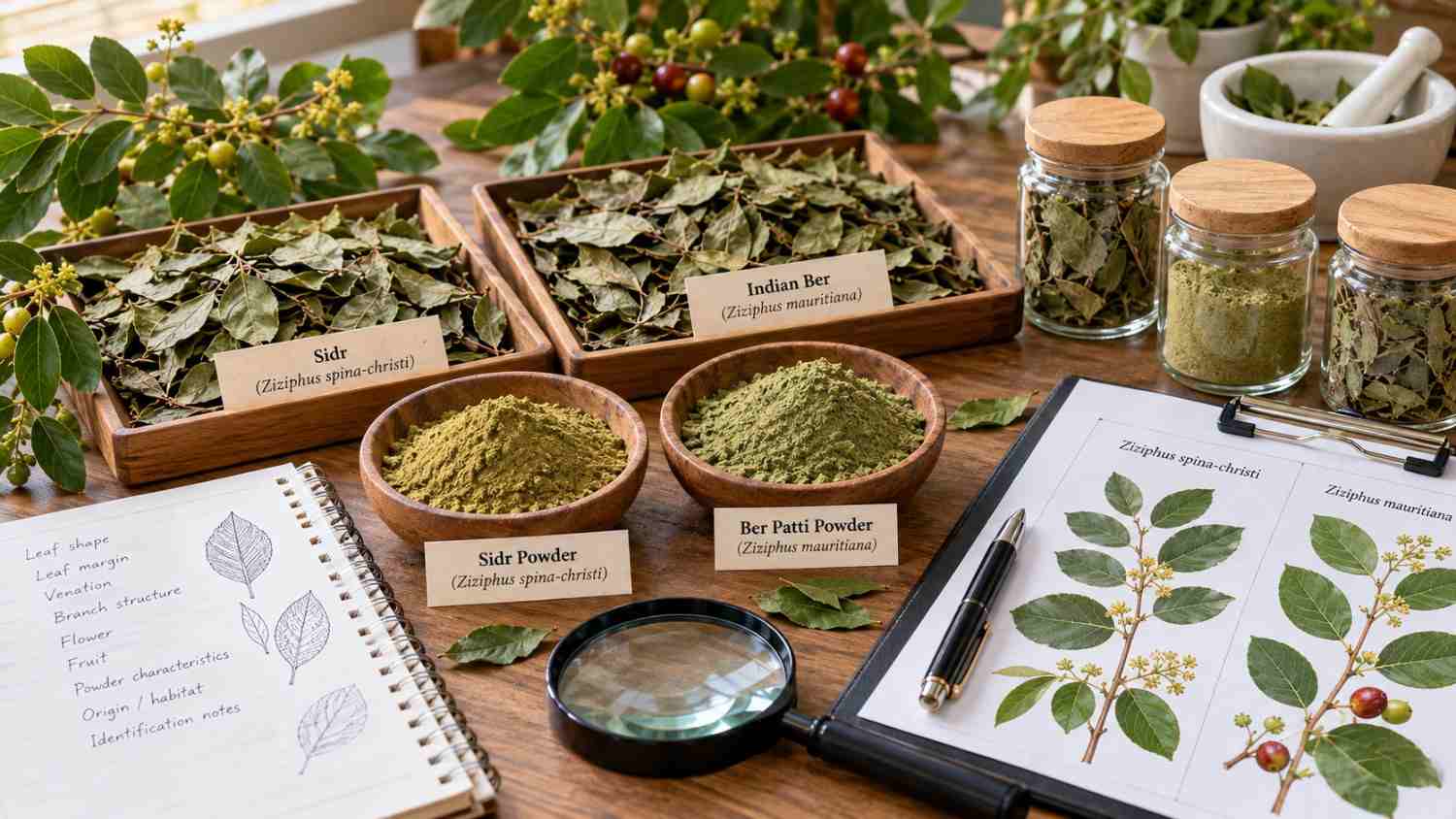
Are Sidr Powder and Ber Patti Powder the same? The answer is not necessarily. Arabian Sidr is commonly identified as Ziziphus spina-christi, while Indian Ber is commonly associated with Ziziphus mauritiana. Although these plants belong to the same botanical genus, they are different species.
Confusion often arises because the names Sidr, Ber and jujube are used across different languages, regions and herbal markets. Two suppliers may sell similar-looking leaf powders under familiar names even when the actual plants are different.
For consumers, this distinction matters when choosing ingredients for traditional herbal preparations. For cosmetic manufacturers and wholesale buyers, accurate botanical identification is essential for product specifications, ingredient declarations and quality control.
This guide compares Sidr Powder vs Ber Patti Powder using botanical information, leaf characteristics, traditional applications and practical purchasing considerations.
What Is Sidr Powder?
Sidr Powder is traditionally prepared from dried leaves of trees commonly known as Sidr. One important species associated with Arabian Sidr is Ziziphus spina-christi (L.) Desf., a member of the Rhamnaceae family.
The plant is found in parts of the Middle East and Africa, where it has cultural and botanical importance. Sidr leaves have traditionally been used in cleansing preparations, including herbal hair washes and other washing practices.
The leaves are generally dried and ground into powder. When mixed with water, the powder creates a botanical paste or suspension that can be applied and rinsed away.
Why Is Sidr Used in Traditional Hair Washing?
Some species of Ziziphus contain natural compounds, including saponins, which may contribute to cleansing properties. However, the composition of a leaf powder depends on the plant species, growing environment, maturity, harvesting and processing.
Traditional Sidr preparations are not automatically equivalent to commercial shampoo formulations. Their cleansing performance, stability and suitability can differ considerably.
Claims that Sidr Powder permanently prevents hair fall or cures scalp conditions should not be made without appropriate clinical evidence.
What Is Ber Patti Powder?
Ber Patti Powder, written in Hindi as बेर पत्ती पाउडर, is a powder made from the leaves of the Ber tree.
In India, Ber commonly refers to Ziziphus mauritiana Lam., also known as Indian jujube. The plant belongs to the Rhamnaceae family and grows in warm and seasonally dry environments.
The Ber tree is widely recognized for its edible fruit. However, the leaves, fruits, bark and seeds are different plant materials and should not be treated as interchangeable ingredients.
How Is Ber Patti Powder Prepared?
Ber leaf powder is generally prepared through sorting, cleaning, drying, grinding and sieving. The quality of the finished powder depends on the botanical identity of the raw leaves, the drying method, particle size and storage conditions.
Ber leaves may be evaluated for botanical preparations or suitable cosmetic research, but their use should be supported by formulation testing and safety evaluation.
Importantly, scientific research involving Ber fruit or seed extracts does not automatically establish the same properties for Ber leaf powder.
Sidr Powder vs Ber Patti Powder: Key Botanical Differences
Understanding the scientific names of these plants is the first step toward making an accurate comparison.
| Feature | Arabian Sidr | Indian Ber |
|---|---|---|
| Common name | Sidr, Christ’s thorn jujube | Ber, Indian jujube |
| Commonly associated scientific name | Ziziphus spina-christi | Ziziphus mauritiana |
| Botanical family | Rhamnaceae | Rhamnaceae |
| Genus | Ziziphus | Ziziphus |
| Regional association | Middle East and Africa | India and other warm regions |
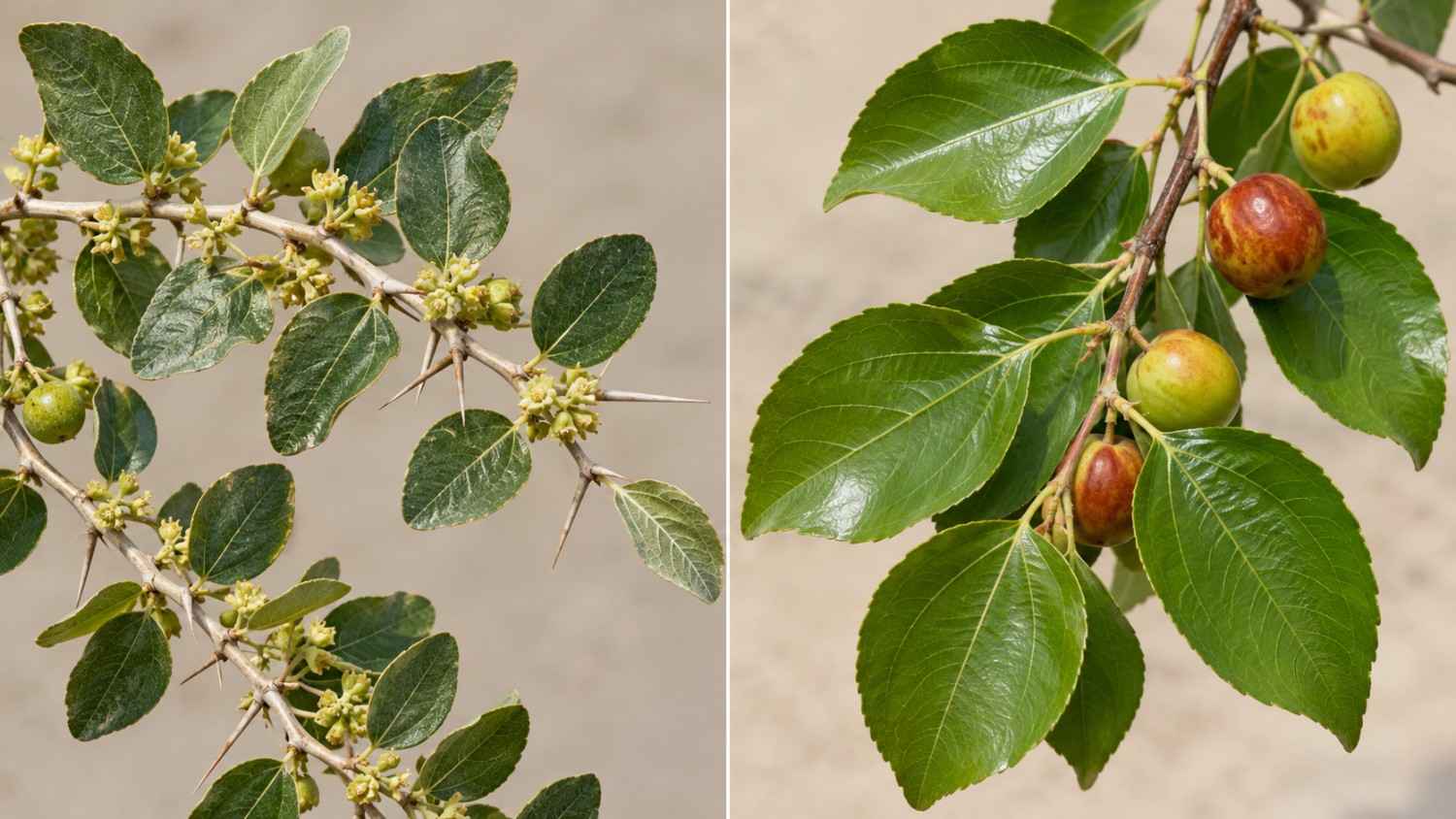
| Common leaf characteristics | Often elliptic or ovate leaves with variable margins | Often oval or elliptic leaves with variable surface texture |
| Traditional associations | Washing and botanical cleansing preparations | Edible fruits and other traditional plant uses |
| Powder appearance | Green to olive tones can occur | Green to olive tones can occur |
| Species verification | Required for accurate sourcing | Required for accurate sourcing |
| Automatic substitution | No | No |
Both plants belong to the genus Ziziphus, but being members of the same genus does not make them chemically or botanically identical.
Different species may have overlapping leaf characteristics while differing in their composition, distribution and traditional applications. Buyers should therefore use verified scientific names instead of relying entirely on familiar trade names.
Why Are Sidr and Ber Sometimes Called the Same Plant?
Common plant names develop through language, geography and traditional usage. Unlike scientific botanical names, common names are not always limited to one species.
In Arabic-speaking regions, Sidr is a culturally familiar name associated with certain Ziziphus trees. In India, Ber commonly refers to Indian jujube, particularly Ziziphus mauritiana.
English names such as jujube, lote tree and thorn jujube may also be used in descriptions of related plants. International botanical trade can create further confusion when regional names are translated or shortened.
Why Trade Names Can Be Misleading
Imagine two suppliers advertising Sidr leaf powder. One supplier identifies the plant as Ziziphus spina-christi, while another identifies it as Ziziphus jujuba.
Although both may use the same common product name, the scientific names indicate different botanical species. A buyer requiring one species should not approve a substitute without reviewing the formulation and product specification.
For accurate identification, the botanical name matters more than the marketing description.
How Can You Identify Sidr Leaves and Ber Leaves?
Botanists identify plants using several characteristics together, rather than relying on a single leaf or photograph.
Leaf Shape and Arrangement
Leaves from both species can be oval or elliptic, and their appearance varies according to plant age, growing conditions and individual variation.
Both belong to a plant group known for distinctive venation, including prominent veins arising near the leaf base. This shared characteristic explains why visual comparisons can be difficult.
Leaf Texture and Margins
Surface hairiness, texture and the pattern of leaf margins may provide identification clues. However, these characteristics can overlap between related species and may be less obvious in dried material.
Flowers, Spines and Fruits
When examining a complete plant, features such as branch structure, spines, flowers and fruit morphology can provide additional evidence.
Identification is more reliable when several characteristics are examined together and compared against authenticated botanical references.
Do Sidr Powder and Ber Patti Powder Look the Same?
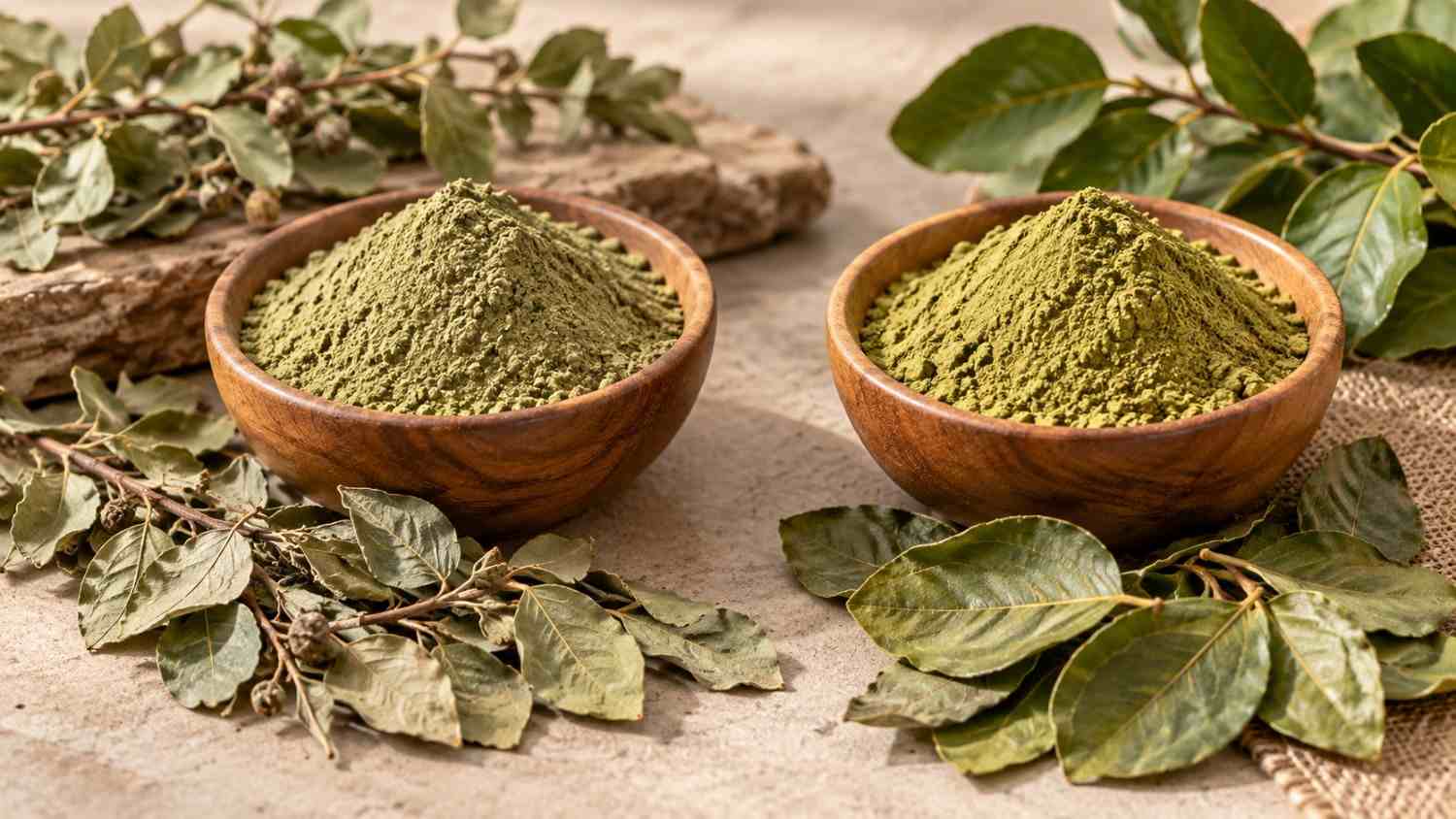
Yes, they can look very similar. Both are leaf-derived powders that may have green, olive or brownish-green tones depending on the raw material and processing method.
The color of botanical powder may change with leaf maturity, drying temperature, grinding conditions, storage duration and exposure to moisture.
A finely ground powder may also appear different from a coarser powder, even when both originate from the same species.
Consequently, comparing two bowls of green powder does not prove that they are botanically identical or different.
Traditional Uses of Sidr Powder and Ber Leaves
Sidr leaves have a longstanding association with washing practices in parts of the Middle East. Ground leaves are used in traditional preparations for cleansing hair and skin.
The Indian Ber plant is better known commercially for its fruit, although its leaves and other plant parts are also discussed in traditional botanical literature.
Traditional applications vary according to geography, community and the specific part of the plant used.
Traditional Use Is Not the Same as Scientific Proof
A plant may have been used for generations without having sufficient clinical research to establish every claimed benefit.
For example, laboratory research investigating plant compounds does not automatically demonstrate that applying the whole leaf powder will produce the same result in people.
This distinction is particularly important when evaluating hair-growth claims, skin treatment claims or statements about medicinal effects.
Neither Sidr nor Ber leaf powder should be presented as a guaranteed treatment for hair loss or scalp disease.
Sidr Powder vs Ber Patti Powder for Hair Care
One reason people compare these two powders is their interest in plant-based hair washing and herbal masks.
Sidr has established traditional associations with cleansing preparations, while Ber leaf powder should be evaluated separately according to its botanical identity and intended use.
Can Sidr Powder Be Used as a Hair Wash?
Traditional Sidr hair washes are generally prepared by mixing the leaf powder with water to form a paste or suspension.
The mixture is applied to the hair or scalp and rinsed away. Its cleansing characteristics can depend on natural plant compounds, particle size and preparation method.
However, a traditional herbal wash does not necessarily provide the same performance, preservation or conditioning characteristics as a professionally formulated shampoo.
Can Ber Patti Powder Give the Same Results?
It should not be assumed. Even closely related plants can differ in composition, and the available evidence does not establish that their powders perform identically in every hair care preparation.
Manufacturers should compare the two ingredients through appropriate formulation and safety testing rather than treating them as direct substitutes.
Are Both Powders Safe for Everyone?
Natural ingredients are not automatically irritation-free. Botanical powders may cause sensitivity, discomfort or dryness in some users.
People using unfamiliar preparations should test a small area first, avoid contact with the eyes and stop using the product if irritation develops.
Can Ber Patti Powder Replace Sidr Powder?
Not automatically. Substituting one botanical ingredient for another requires more than confirming that the products belong to the same genus.
A cosmetic manufacturer specifying Ziziphus spina-christi may not be able to replace that material with Ziziphus mauritiana without reviewing the formula, ingredient documentation and relevant safety requirements.
Important considerations include the scientific species, plant part, particle size, chemical characteristics, quality specifications, intended use and regulatory labeling.
Even if two powders look similar, their interchangeability must be established through appropriate evaluation.
How to Identify Authentic Sidr Powder Before Buying
Whether purchasing a small retail pouch or ordering a wholesale shipment, botanical authenticity is an important quality consideration.
- Confirm the botanical name: Ask which Ziziphus species the powder contains.
- Check the plant part: Confirm that the raw material is leaf powder rather than fruit, seed or a blend.
- Review product specifications: Check particle size, moisture and other relevant quality parameters.
- Request documentation: Commercial buyers may need a Certificate of Analysis and supporting botanical information.
- Check traceability: Ask whether batch records identify the raw material and processing lot.
- Review packaging: Dry botanical powders should be protected from contamination and unsuitable storage conditions.
- Evaluate samples: Samples can help assess texture and suitability for the intended preparation.
Buyers should remember that neither a sample photograph nor the shade of the powder can reliably establish the species.
Why Botanical Quality Verification Matters
For cosmetic manufacturers and international ingredient buyers, product information should remain consistent across technical specifications, purchase orders, laboratory reports and applicable labeling documents.
A supplier describing the material under one scientific name in a specification and another in its marketing content should clarify the identity before completing a commercial order.
Why Scientific Names Matter in Herbal Product Labeling
Scientific names help reduce ambiguity in international trade, cosmetic formulation and botanical research.
For example, a commercial product described simply as jujube leaf powder may not provide enough information to determine which botanical species it contains.
When a formulation requires a specific ingredient, the supplier’s technical records should identify the correct plant and the relevant plant part.
Cosmetic ingredient naming may also require appropriate standardized terminology under the applicable market rules. A label should reflect the actual material supplied rather than a convenient or familiar trade name.
Consistent botanical identification helps manufacturers evaluate sourcing changes and maintain accurate product records.
Which Powder Should You Choose?
The right choice depends on your purpose.
- For traditional Sidr washing: Choose a product with the botanical identity required by the preparation.
- For botanical research: Obtain authenticated material with reliable scientific identification.
- For cosmetic manufacturing: Assess ingredient safety, quality and formulation compatibility.
- For wholesale purchasing: Request specifications, available testing and batch documentation.
- For personal use: Read the ingredients carefully and follow appropriate application precautions.
Companies researching commercial botanical ingredients can review Hennahub India’s Sidr Powder manufacturing and export information for product details and B2B sourcing enquiries.
Because common names can overlap, buyers should confirm the actual species offered for the intended shipment before proceeding.
Final Verdict: Are Sidr Powder and Ber Patti Powder the Same?
The comparison of Sidr Powder vs Ber Patti Powder demonstrates why botanical names matter more than general product descriptions.
Arabian Sidr is commonly associated with Ziziphus spina-christi, while Indian Ber commonly refers to Ziziphus mauritiana. They belong to the same botanical genus but remain distinct species.
Similar-looking leaves, overlapping regional names and comparable powder colors can cause confusion. However, these similarities do not establish botanical equivalence.
Whether you are preparing a traditional herbal wash, developing a cosmetic formulation or buying botanical ingredients in bulk, verify the scientific name, plant part and product specification.
Accurate identification is the foundation of informed herbal ingredient selection.
Frequently Asked Questions
1. Is Sidr Powder the same as Ber Patti Powder?
Not necessarily. Arabian Sidr commonly refers to Ziziphus spina-christi, while Indian Ber commonly refers to Ziziphus mauritiana. These are distinct species.
2. What is the botanical name of Arabian Sidr?
Arabian Sidr is commonly associated with Ziziphus spina-christi (L.) Desf., a species in the Rhamnaceae family.
3. What is the scientific name of Indian Ber?
Indian Ber commonly refers to Ziziphus mauritiana Lam., also called Indian jujube.
4. Are Ziziphus spina-christi and Ziziphus mauritiana the same species?
No. They are recognized as distinct botanical species within the same genus.
5. Why are Sidr and Ber sometimes confused?
Overlapping regional names, translations and shared botanical features can cause confusion in traditional herbal markets and international trade.
6. How can I identify genuine Sidr Powder?
Check the scientific name, plant part, product specifications and available supplier documentation. Powder color alone cannot confirm authenticity.
7. Can Ber Patti Powder replace Sidr Powder for hair washing?
Not automatically. Different species may have different characteristics. Suitability should be evaluated for the intended preparation.
8. Do Sidr and Ber leaves contain similar natural compounds?
Related plants may contain overlapping classes of natural compounds, but their composition and concentrations can differ. Specific comparisons require laboratory evidence.
9. Can both powders be used in cosmetic formulations?
Either may be evaluated as a botanical ingredient, depending on species, intended application, safety assessment and applicable regulations.
10. Where can I find Sidr Powder for wholesale or export?
Hennahub India provides Sidr Powder manufacturing and export information for B2B buyers at hennahub.in/sidrpowder/. Confirm botanical identity and shipment specifications directly with the supplier.
Looking for Bulk Sidr Powder from India?
Understanding the botanical identity of Sidr is important when sourcing herbal ingredients for cosmetic manufacturing, wholesale distribution or private-label products.
Hennahub India, based in Sojat, Rajasthan, provides Sidr Powder manufacturing, wholesale supply and export enquiry services. Buyers can discuss product specifications, packaging, quality documentation and commercial requirements.
Explore Sidr Powder Manufacturer & Bulk Export SupplierPlease confirm the exact botanical species and current batch specifications before placing an order.
Botanical References and Further Reading
Royal Botanic Gardens, Kew: Plants of the World Online — an authoritative resource for accepted plant names and botanical classifications.
Comparative botanical research: Variations in Morphological Characters and Antioxidant Potential of Different Plant Parts of Four Ziziphus Species — published in Plants (2021).
Supplier information: Hennahub India — Sidr Powder Manufacturer and Exporter .
Editorial note: This article provides botanical education and general purchasing guidance. Traditional uses do not establish medical effectiveness. Product identity and regulatory suitability should be verified independently before commercial use.