
Pure Sidr Leaf Powder vs Mixed Herbal Powder: Which Should You Buy?
Compare single-ingredient Sidr leaves with multi-herb hair care powders. Learn about botanical identity, cleansing routines, ingredient combinations, product quality and the factors that matter before buying.
Choosing between pure Sidr leaf powder and a mixed herbal powder can be confusing, especially when both products are advertised for natural hair washing, scalp care or homemade hair masks. Some buyers prefer a single botanical ingredient, while others want a ready-made combination containing several traditional herbs.
Pure Sidr is generally sold as ground leaves of a specified Ziziphus species. Mixed herbal powders may contain Sidr alongside ingredients such as amla, reetha, shikakai, hibiscus or bhringraj. The composition varies by product, meaning that one herbal blend may perform differently from another.
Neither option is automatically better for everyone. Your decision should depend on botanical authenticity, ingredient transparency, preparation convenience, hair characteristics and personal tolerance. This guide compares the two product types and explains how to choose a powder that matches your intended hair care routine.
What Is Pure Sidr Leaf Powder?
Pure Sidr leaf powder is a single-ingredient preparation made by drying and grinding leaves from a plant identified as Sidr. Arabian Sidr is commonly associated with Ziziphus spina-christi, a species belonging to the Rhamnaceae family. It has a history of use in traditional washing preparations in parts of the Middle East.
The name Sidr can also appear in commerce for different related plants. For this reason, a product described only as “natural Sidr” does not tell a buyer everything about its botanical identity. A good specification should state the scientific name and the plant part used.
The Royal Botanic Gardens, Kew recognizes Ziziphus spina-christi as an accepted species. This helps distinguish it from related species commonly described using names such as Indian Ber or jujube.
What Does Single-Ingredient Mean?
A genuine single-ingredient Sidr powder should contain only the declared Sidr leaf material, without other herbal powders, fragrance or undisclosed fillers. That is a product-composition claim, however, and its accuracy depends on the supplier’s manufacturing and quality controls.
A powder with a single ingredient is useful when you want to assess how your hair responds to Sidr without several other plant materials influencing the experience. You can then decide whether to use it on its own or mix it with another ingredient.
How Is Pure Sidr Powder Prepared?
Leaves are selected, cleaned, dried and milled to the required texture. Processing conditions matter because residual moisture, contamination and unsuitable storage can affect the quality of dry botanical material.
For a hair wash, finely ground powder may be easier to turn into a smooth paste than coarse leaves. Nevertheless, fine texture does not prove the plant’s identity or establish any particular therapeutic benefit.
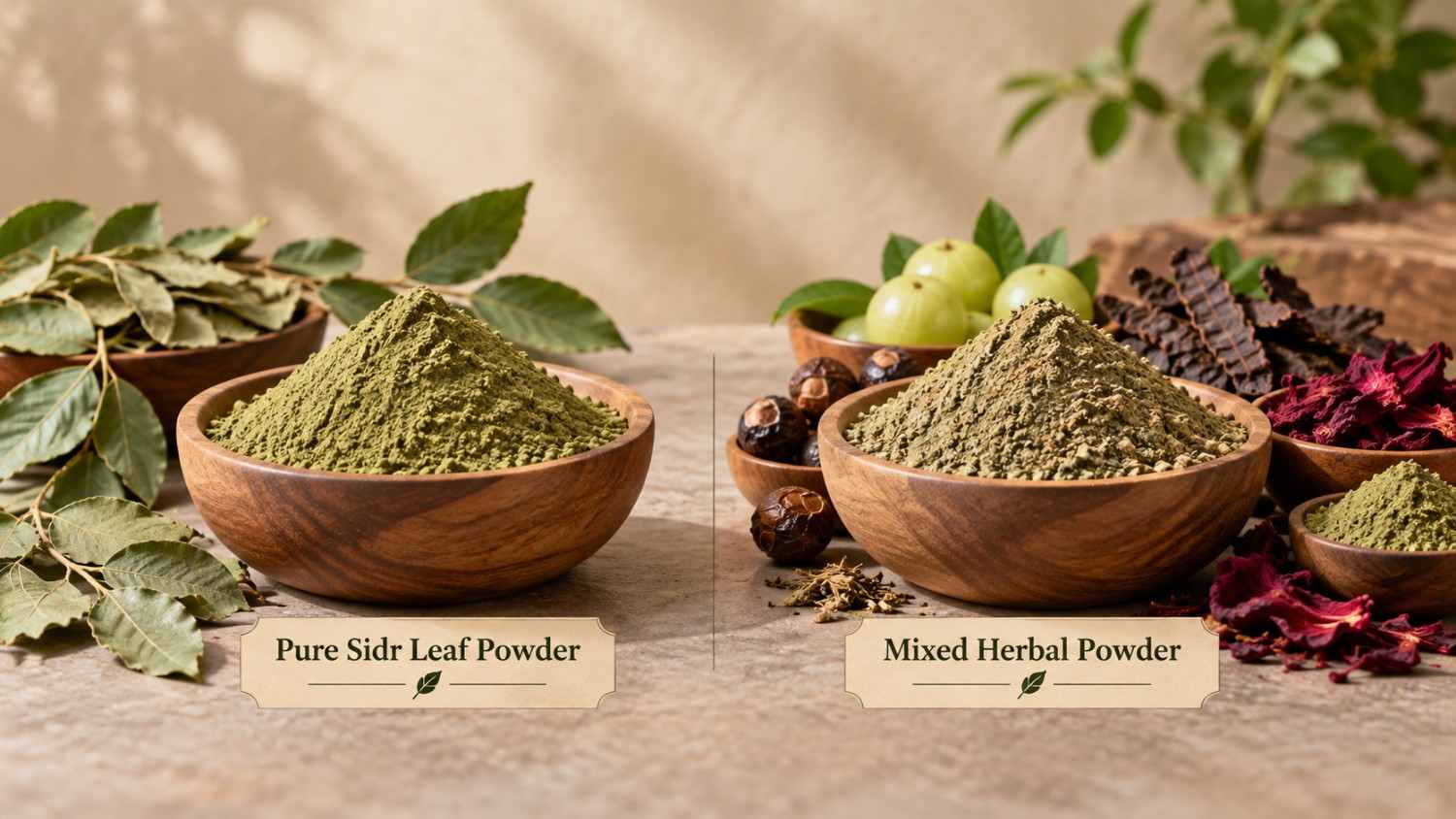
What Is Mixed Herbal Powder?
Mixed herbal powder is a blend of two or more botanical ingredients. In hair care, common combinations include amla, reetha, shikakai, hibiscus, bhringraj and sometimes henna. A blend may contain Sidr, but many herbal combinations do not.
There is no universal recipe for mixed herbal hair powder. One product might contain mostly cleansing herbs, another might emphasize powdered hair masks, and a third could include natural coloring ingredients.
This makes the ingredient list more important than the marketing name. A product called “herbal hair care powder” can describe very different formulations depending on its ingredients and proportions.
Why Do People Choose Multi-Herb Blends?
Convenience is one reason. Instead of purchasing several ingredients separately, customers can select a prepared combination intended for a particular routine. A well-designed blend may also combine ingredients with different physical or traditional functional characteristics.
However, mixed formulations introduce additional variables. If a user experiences dryness, irritation or an unexpected hair feel, it can be difficult to determine which component contributed to the response.
More ingredients can also make the preparation harder to standardize at home. A blend with a fixed formula may be convenient, but it offers less control over each ingredient’s proportion than buying powders separately.
Pure Sidr Leaf Powder vs Mixed Herbal Powder: Key Differences
The main difference is not simply whether a powder is natural. Both types can contain plant-derived ingredients. What matters is whether the formulation matches the user’s needs, is clearly identified, and can be used appropriately.
| Feature | Pure Sidr Leaf Powder | Mixed Herbal Powder |
|---|---|---|
| Ingredient count | One declared botanical ingredient | Two or more ingredients |
| Botanical identity | One species should be clearly identified | Each ingredient should be declared accurately |
| Preparation | Usually mixed with water | Depends on formulation instructions |
| Customization | Easy to combine with chosen ingredients | Fixed pre-blended proportions |
| Hair washing | Traditional use associated with Sidr leaves | Varies with cleansing herbs included |
| Hair coloring | Not primarily a hair dye | Some blends may contain coloring ingredients |
| Ingredient sensitivity | One ingredient to evaluate | Several potential sources of sensitivity |
| Convenience | Allows a simple routine or DIY mixing | Convenient for a preselected combination |
| Best selection criterion | Species identity, purity and intended use | Complete formula, proportions and suitability |
A pure powder offers simplicity and ingredient control. A blended powder may offer convenience and a combination of plant materials, but its performance depends on the formulation rather than on the number of herbs.
Neither approach guarantees healthier roots, faster growth or fewer scalp problems. Those claims require evidence specific to the product and its intended use.
Which Is Better for Hair Washing?
For traditional hair washing, Sidr may appeal to people who want to explore a single leaf-based preparation. The powder is generally mixed with water, applied to the scalp and hair, and rinsed away.
The cleansing experience can differ from that of bottled shampoo. A Sidr paste may create little foam, and powder particles may require additional rinsing. Users with very long, dense or curly hair may need extra time to remove residues.
A mixed herbal powder containing reetha or shikakai may behave differently because its ingredient composition changes the formulation. However, the presence of several cleansing herbs does not guarantee a gentler wash. Some botanical ingredients can irritate the eyes or cause dryness and sensitivity.
Does More Lather Mean Better Cleaning?
No. Foam is not a direct measurement of cleansing performance. Some formulated shampoos produce abundant lather, while certain botanical preparations produce little. The effectiveness of either depends on its formulation, how it is applied, and the type of dirt or oil being removed.
A well-formulated conventional shampoo may be more convenient and predictable than a homemade herbal paste. Consumers should choose according to their practical needs rather than assuming that natural powders are always superior.
What About Dry or Sensitive Scalps?
Neither pure Sidr nor a mixed herbal powder can be guaranteed suitable for every sensitive scalp. Even a single plant ingredient may cause contact irritation or allergic reactions.
Patch testing is sensible before trying a new product, and persistent itching, significant flaking or inflammation should be assessed by a qualified healthcare professional instead of being treated with increasingly complicated homemade mixtures.
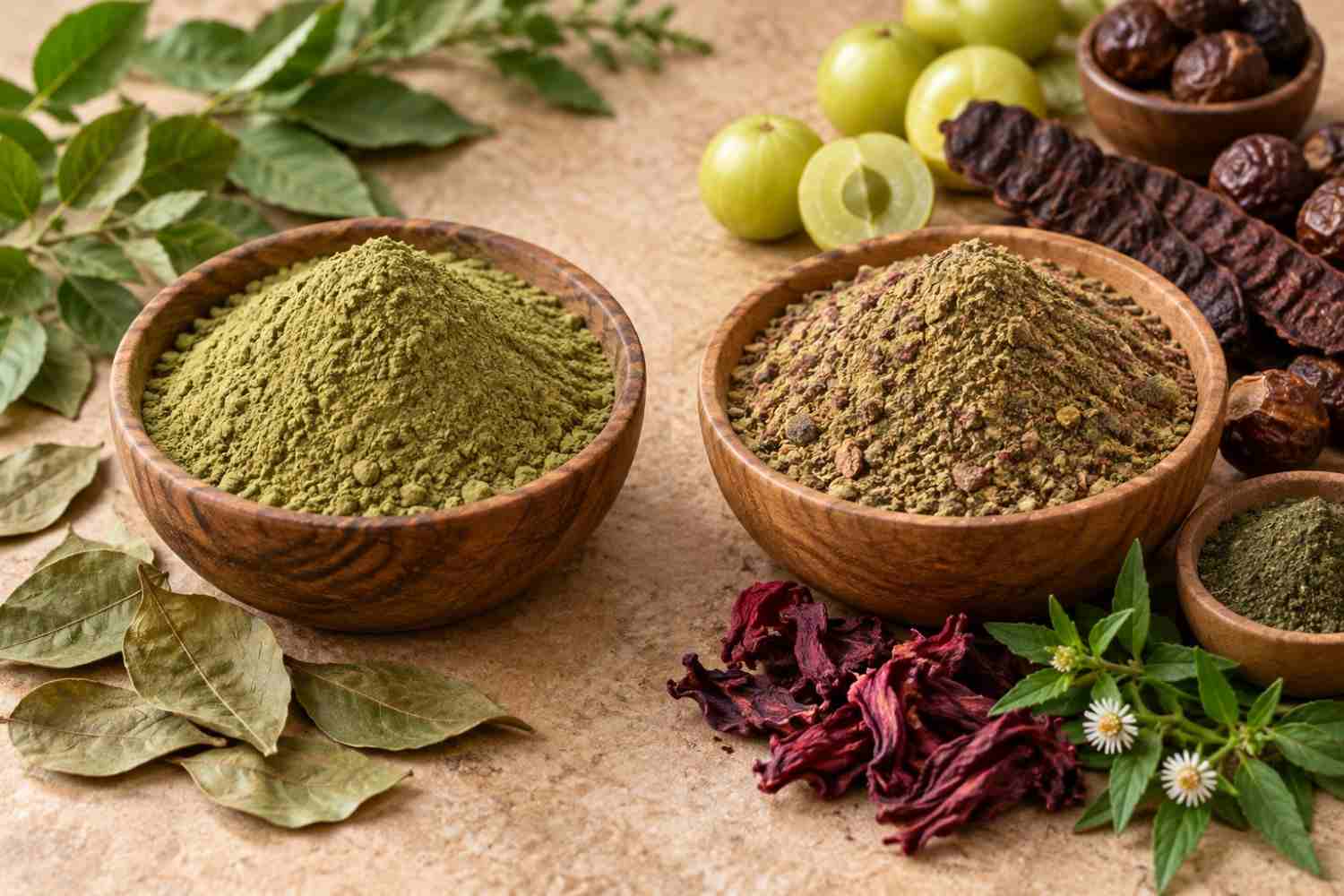
Which Herbs Are Commonly Added to Hair Care Blends?
Understanding common herbal ingredients makes it easier to interpret a powder label. Different herbs have different traditional associations and formulation characteristics, and those differences matter when choosing a mix.
Reetha and Shikakai
Reetha and shikakai are familiar in traditional Indian hair washing. Plant saponins contribute to the cleansing behavior associated with some of these materials. Their exact performance depends on preparation and concentration, and users should avoid getting herbal washes into their eyes.
Amla
Amla is used in traditional hair care powders and masks. It has a different botanical identity and composition from Sidr. Adding amla changes the blend rather than simply making Sidr stronger.
Hibiscus and Bhringraj
Hibiscus and bhringraj are widely included in traditional hair mask combinations. They may be selected for their texture, cultural use or specific formulation goals, but strong claims about guaranteed hair growth should not be inferred from their presence on a label.
Henna
Henna is particularly important because it contains lawsone, a natural coloring molecule. A herbal powder blend that includes henna may have coloring implications depending on the formula, preparation and hair characteristics.
Someone seeking a non-coloring hair wash should therefore check the label carefully instead of assuming that every herbal hair powder is simply a cleanser.
How Can You Check Whether Pure Sidr Leaf Powder Is Genuine?
When shopping for pure Sidr leaf powder, a good starting point is the product’s ingredient declaration. Look for the exact plant name and whether the manufacturer identifies the material as leaf powder.
Arabian Sidr is commonly associated with Ziziphus spina-christi. Related names such as Ber, jujube and Sidr sometimes overlap in commerce, so the exact species should be confirmed where botanical identity is important.
Color alone is not reliable. Leaf powders may vary from bright green to olive or brownish-green according to the plant material, drying and storage. Two different species may produce similar-looking powder.
A Practical Buying Checklist
- Scientific name: Verify the precise species being supplied.
- Plant part: Confirm that the powder contains leaves.
- Ingredient list: Check for added herbs, fragrances or fillers.
- Manufacturer details: Look for a clearly identified supplier.
- Net weight: Compare quantities rather than just pouch prices.
- Storage: Choose suitable sealed, moisture-protective packaging.
- Product instructions: Review preparation and safety guidance.
- Batch records: For commercial purchasing, ask for relevant quality documentation.
A supplier’s Certificate of Analysis can be useful when it identifies the actual lot and relevant tested parameters. However, a generic report or an attractive certificate image does not independently establish the identity of every retail pouch.
For readers exploring the supply side, Hennahub India’s Sidr Powder manufacturer and bulk supply page describes its wholesale packing and export services. Buyers should reconcile the stated botanical identity across the supplier’s documents before ordering.
How to Prepare Pure Sidr Leaf Powder at Home
For a straightforward preparation, begin with a small quantity and follow the specific directions on the product label. One Hennahub retail listing recommends mixing approximately two to three tablespoons with warm water for a hair wash, leaving the mixture on the hair for about 10–15 minutes before rinsing thoroughly.
- Place the required powder in a clean bowl.
- Add lukewarm water gradually and stir into a smooth paste.
- Perform a patch test before first use.
- Apply gently while avoiding contact with the eyes.
- Follow the product’s contact-time instructions.
- Rinse thoroughly, taking extra care with longer hair.
Using pure Sidr first makes it easier to observe how the preparation feels on your own hair. If you later experiment with an herbal mixture, introducing one additional ingredient at a time can make any changes easier to understand.
Wet herbal preparations should normally be prepared for immediate use unless the product provides validated storage instructions. Water-based mixtures can support microbial growth if stored improperly.
Which Should You Buy for Your Hair Care Routine?
The best choice is based on how you intend to use the product, not merely on whether its label says “pure” or “five herbs.”
Choose Pure Sidr If You Prefer Simplicity
A single-ingredient Sidr product may suit someone who wants to explore a traditional leaf wash, avoid unnecessary ingredient complexity, or control the composition of a DIY hair mask. It also makes botanical identity easier to investigate because the label should describe just one raw material.
Consider a Mixed Herbal Powder for a Defined Routine
A multi-herb powder may be useful if you want the convenience of a prepared combination and understand the purpose of its ingredients. It is especially important to read the label when the mixture contains cleansing herbs, acidic ingredients or natural coloring materials.
Compare the Total Cost and Practical Effort
Pure powder may be a good starting point for someone experimenting with formulations, while a ready-made mix may reduce the need to buy several separate packs. The better value depends on price per use, waste, storage, convenience and how well the product matches your preferences.
Neither product type is a guaranteed solution for hair growth. If that is your primary concern, evaluate the possible causes of hair shedding rather than relying solely on a herbal powder purchase.
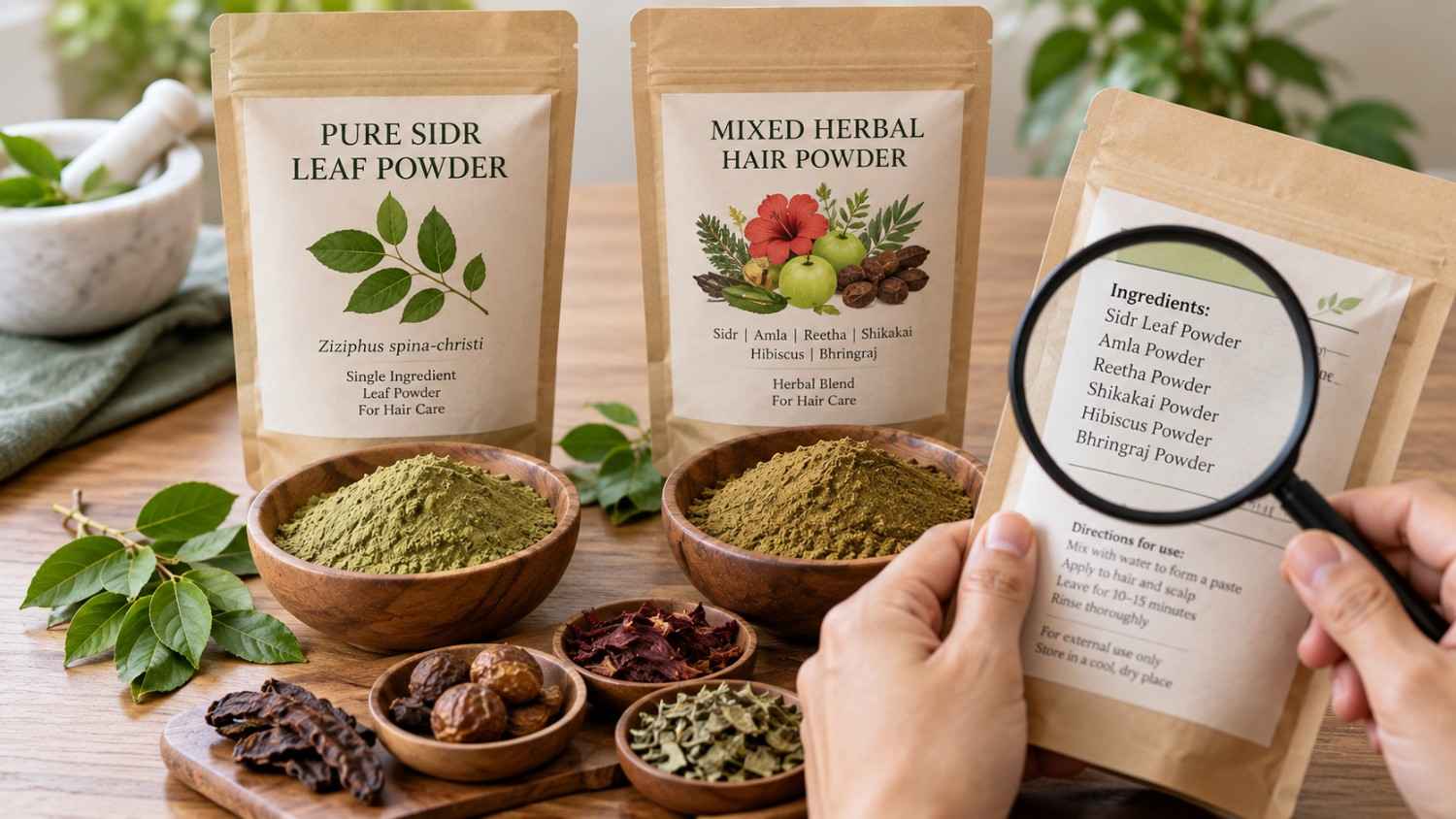
Pure Sidr Powder, Bulk Ingredients and Retail Packs
Retail shoppers and professional ingredient buyers often have different priorities. Someone purchasing a small pouch for home use may focus on clear labeling, preparation directions and packaging convenience. A cosmetic manufacturer will usually need more detailed technical specifications and consistency between production lots.
Hennahub India, based in Sojat, Rajasthan, supplies herbal powders through different retail and wholesale channels. Its Sidr Powder product information page describes bulk ingredient specifications and packaging options, while the Hennahub Sidr Powder 100g retail listing provides consumer-facing product information.
Those sources can help readers understand the different buying channels, but they do not remove the need to check the actual botanical species. The retail listing names Ziziphus spina-christi; some supplier descriptions use another Ziziphus name. Ask for clarification when species identification is material to your intended use.
Readers interested in broader sourcing context can also explore Hennahub’s botanical ingredient and export articles. For personal hair care, however, product suitability and honest ingredient information should remain more important than the size of the supplier’s operation.
Final Verdict: Pure Sidr or Mixed Herbal Powder?
Pure Sidr leaf powder is a sensible option when you want a straightforward, single-botanical preparation with the flexibility to add ingredients yourself. A mixed herbal powder may be more convenient if its formulation is appropriate for your intended routine and every ingredient is clearly disclosed.
Neither choice should be judged by the number of herbs, the amount of foam or broad promises about hair growth. Botanical identity, ingredient transparency, preparation guidance, quality controls and individual tolerance are better decision factors.
If you are new to traditional powders, a simple formulation may be easier to evaluate. If you already know your preferences, a carefully selected blend may be convenient. In either case, read the label, patch test before use and buy from a seller willing to provide accurate product information.
Frequently Asked Questions
1. What is pure Sidr leaf powder?
It is a single-ingredient powder made from dried Sidr leaves. Buyers should verify the scientific species and the absence of undeclared additional ingredients.
2. Is pure Sidr leaf powder better than a herbal mix?
Not universally. Pure Sidr offers simpler composition and more control, while a blend may provide convenience. Suitability depends on the actual ingredients and your needs.
3. Can pure Sidr Powder be used for hair washing?
Sidr leaves have traditionally been used in hair-washing preparations. Follow the product directions, patch test, avoid eye contact and rinse thoroughly.
4. Does pure Sidr Powder contain reetha or shikakai?
A genuine single-ingredient Sidr product should not contain other herbs. Reetha or shikakai would make it a blend and should be declared on the label.
5. Can I mix pure Sidr with amla?
Some herbal routines combine them. However, adding amla changes the preparation and may affect its acidity and feel. Introduce ingredients cautiously.
6. Does mixed herbal powder always clean hair better?
No. Cleansing depends on ingredient selection, concentration, preparation and application. More herbs do not automatically improve cleaning performance.
7. Is pure Sidr suitable for sensitive scalps?
Not necessarily. Any botanical ingredient may cause irritation or sensitivity. Patch test first and seek professional advice for persistent scalp concerns.
8. Can a mixed herbal powder change hair color?
Some blends include henna or other coloring materials. Check the complete formula if you want to avoid potential color changes.
9. How can I check whether Sidr Powder is authentic?
Review the scientific name, plant part, ingredient declaration, manufacturer information and relevant documentation. Color alone is not reliable proof.
10. Where can I buy pure Sidr leaf powder in India?
Specialist herbal retailers and official brand stores offer Sidr powders. HennahubStore.com lists a 100g Sidr leaf powder product for external hair care; confirm current details and botanical identity before purchasing.
Explore Pure Sidr Leaf Powder from Hennahub India
If you are researching single-ingredient Sidr for personal hair care, explore the Hennahub 100g retail product. Manufacturers and wholesale buyers can also review Hennahub India’s bulk Sidr Powder information, including packing and sourcing enquiries.
View Sidr Powder 100g for Personal UseFor bulk manufacturing and export requirements: Sidr Powder Manufacturer & Wholesale Supplier
References and Further Reading
Botanical reference: Royal Botanic Gardens, Kew — Ziziphus spina-christi.
Manufacturer product information: Hennahub India — Sidr Powder.
Bulk Sidr supply: Hennahub India — Sidr Powder Manufacturer and Exporter.
Retail product information: Hennahub Sidr Powder 100g.
Educational disclaimer: Traditional hair care uses are not proof of medical effectiveness. The article is intended for ingredient education, not diagnosis or treatment of hair or scalp conditions.