
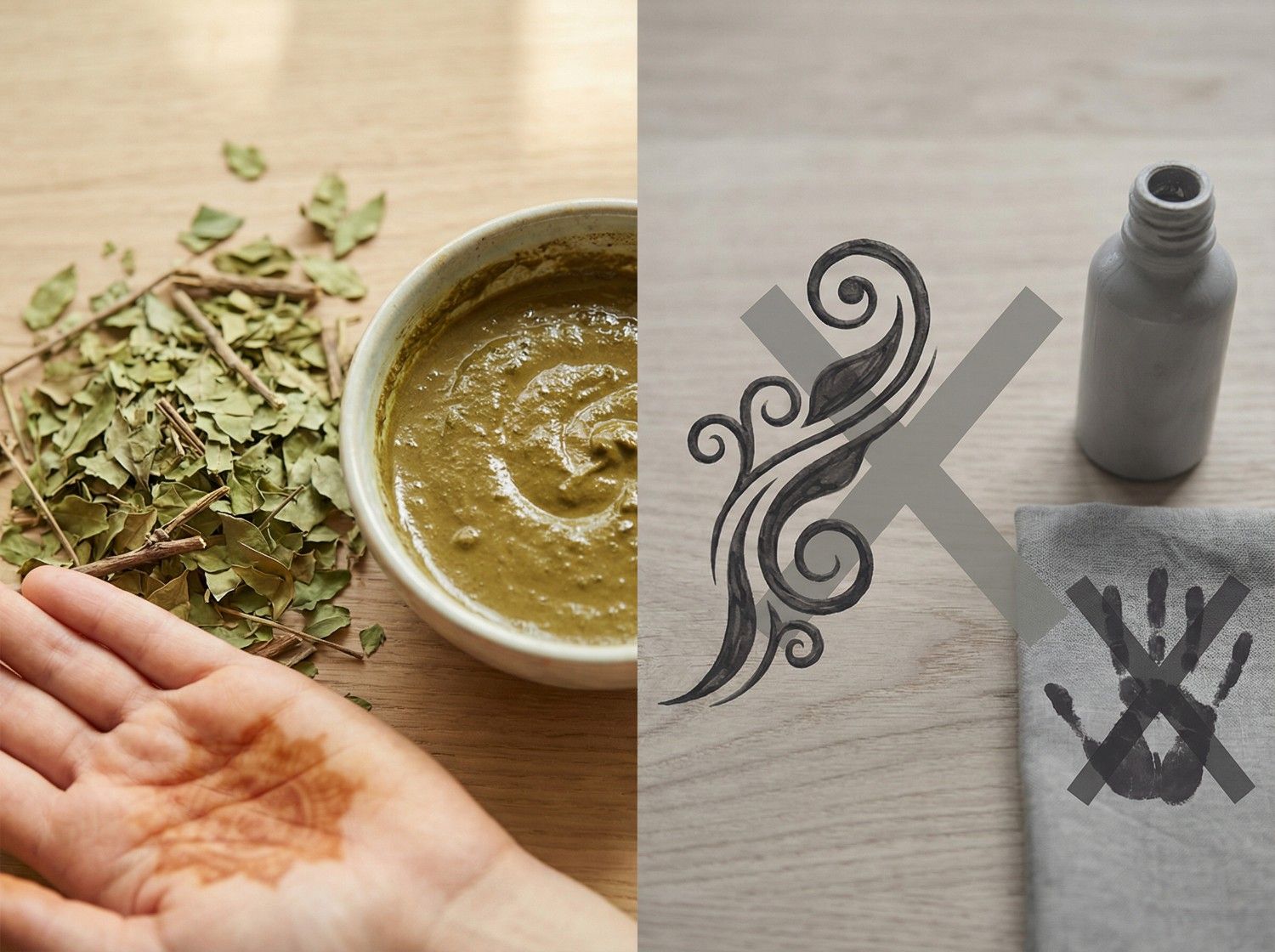
Henna Myths That Still Confuse First-Time Users
If you are using henna for the first time—whether for hands, hair, or both— chances are you have already heard many confusing claims. From “instant black color” to “brand matters more than freshness,” henna myths continue to mislead new users.
This guide clears up the most common henna myths and explains how natural henna powder actually works, so first-time buyers can make informed choices.
Myth 1: Natural Henna Gives Instant Dark Color
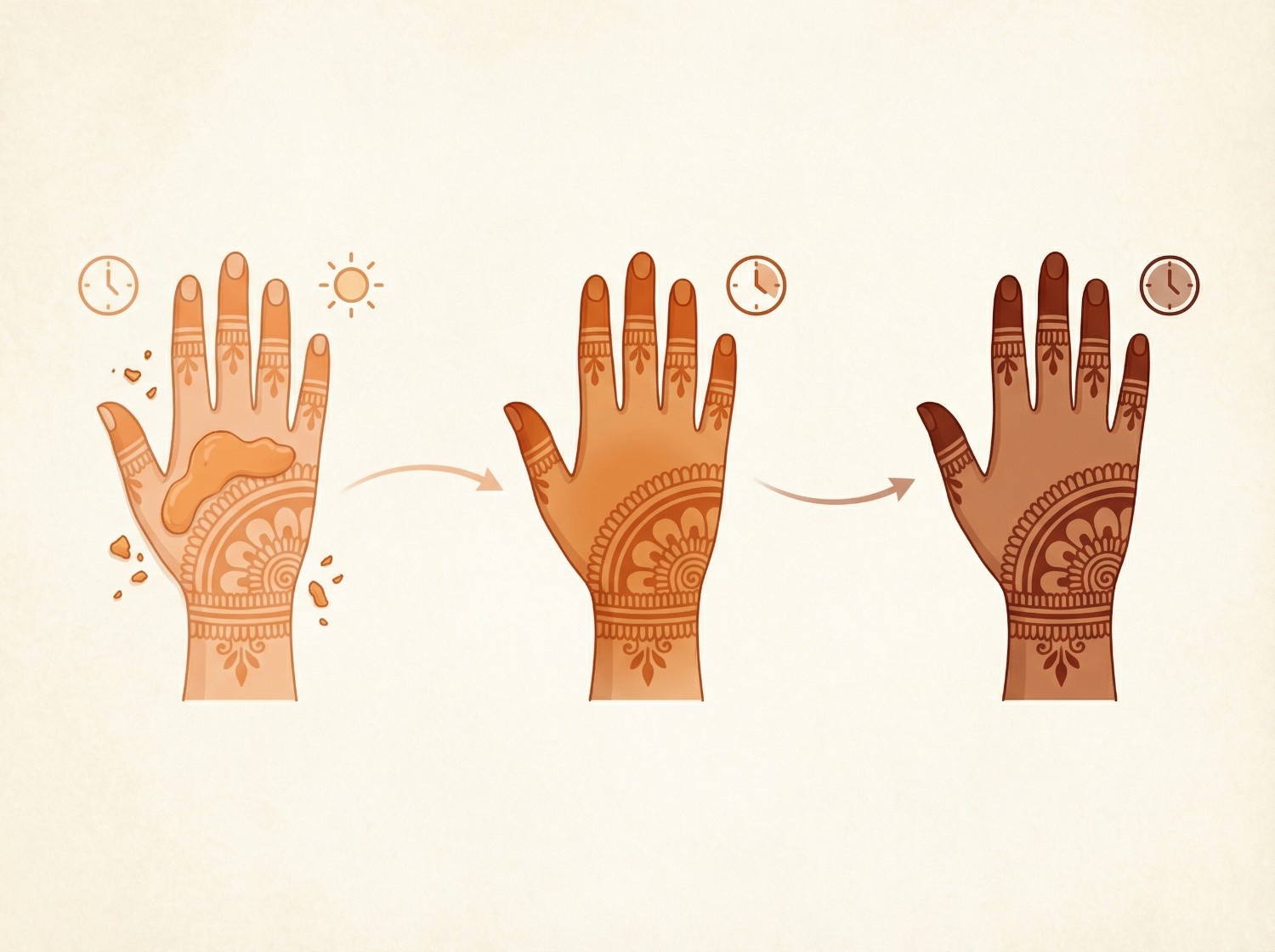
One of the most common searches by first-time users is “henna powder instant dark color”. This myth comes from confusion between natural henna and chemical dyes.
Real henna works slowly. After application, the stain starts light and darkens over 24–48 hours through oxidation. If a product claims instant dark or jet-black color, it is not pure henna.
Natural henna develops color gradually. Slow color change is a sign of authenticity.
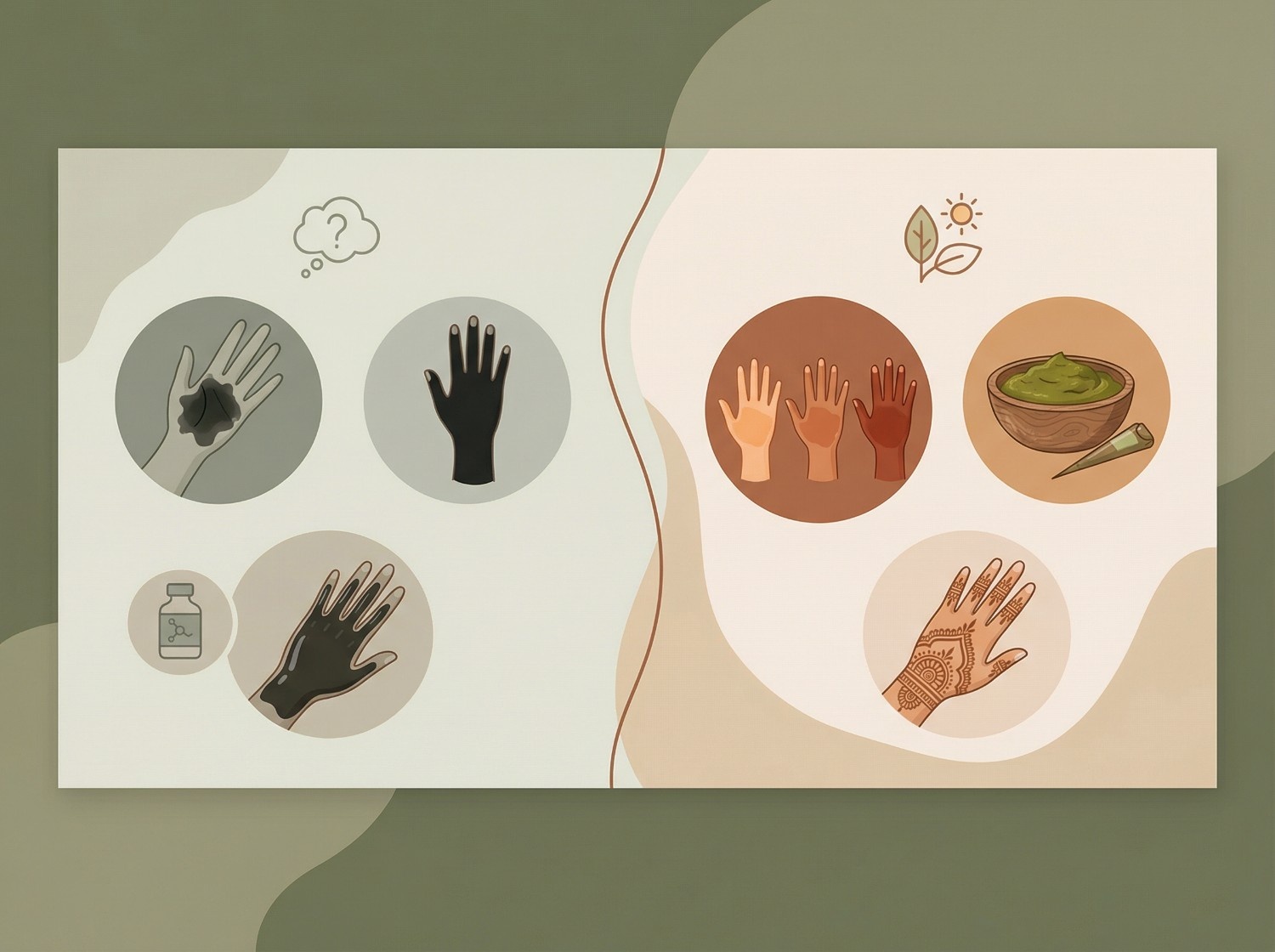
Myth 2: Black Henna Is Just a Stronger Henna
Many first-time buyers search for “black henna powder for hands” or “jet black henna for hair”, assuming it is a natural variation.
In reality, henna cannot produce black color on skin or hair. Products sold as black henna usually contain chemical dyes or additives, which can cause irritation and allergic reactions.
Natural henna stains only in shades of orange to deep brown, depending on skin, hair type, and aftercare.
Myth 3: Brand Name Is the Most Important Factor
First-time users often believe that buying the biggest brand automatically guarantees better results. This leads to searches like “best henna powder brand”.
In truth, henna quality depends more on freshness, harvest season, and storage than on branding. A lesser-known supplier offering fresh henna powder can outperform a famous brand selling old stock.
Myth 4: All Green Henna Powder Is High Quality
Many buyers assume that bright green color automatically means good henna. While color can indicate freshness, it is not the only factor.
Some powders look green but have weak dye strength due to age, poor storage, or improper drying. This is why experienced users focus on stain results rather than appearance alone.
Myth 5: Henna Is Only for Hands (Mehandi)
Another misconception is that henna is only meant for body art. In reality, many buyers search for “natural henna powder for hair” because henna has been traditionally used as a plant-based hair color and conditioner.
Pure henna coats the hair shaft, adds strength, and gives a natural reddish-brown tone, without damaging the hair when used correctly.
Myth 6: Stronger Smell Means Better Henna
First-time users often associate strong smell with potency. Natural henna has an earthy, grassy scent—not a sharp chemical odor.
Overpowering smells usually come from added fragrance or chemicals, not from high-quality henna leaves.
What First-Time Henna Buyers Should Focus On Instead
Rather than chasing myths, first-time users should look for:
- Freshly harvested henna powder
- Clear information about origin and storage
- No claims of instant or black color
- Simple, transparent ingredient lists
If it sounds too good to be true, it probably isn’t natural henna.
Final Thoughts: Understanding Henna Takes Time
Henna is not a shortcut product. It is a traditional, plant-based dye that rewards patience and correct usage. Once first-time users understand how henna really works, most confusion disappears.
Learning the facts helps buyers avoid disappointment and choose henna powder that delivers honest, natural results.
Looking for Pure, Beginner-Friendly Henna Powder?
Explore carefully selected henna powder suitable for first-time users, with clear information and honest expectations.
Buy Natural Henna Powder from HeenaStore.com