
Why Natural Henna Cannot Produce Jet Black Color
Many people expect henna to create a deep jet-black stain instantly. However, natural henna does not and cannot produce jet black color. This article explains the science behind henna, why “black henna” is misleading, and how real henna color actually develops.

1. What Is Natural Henna?
Natural henna comes from the dried leaves of the plant Lawsonia inermis. These leaves are powdered and mixed with liquid to create henna paste. Pure henna contains only plant material and no synthetic dyes or chemical colorants.
When applied to skin or hair, henna produces shades ranging from orange to reddish-brown to deep brown, depending on skin type, hair color, paste quality, and aftercare.
2. The Science Behind Henna Color
Henna’s coloring power comes from a natural dye molecule called lawsone. Lawsone binds with keratin in the skin and hair, creating a stain that develops gradually over time.
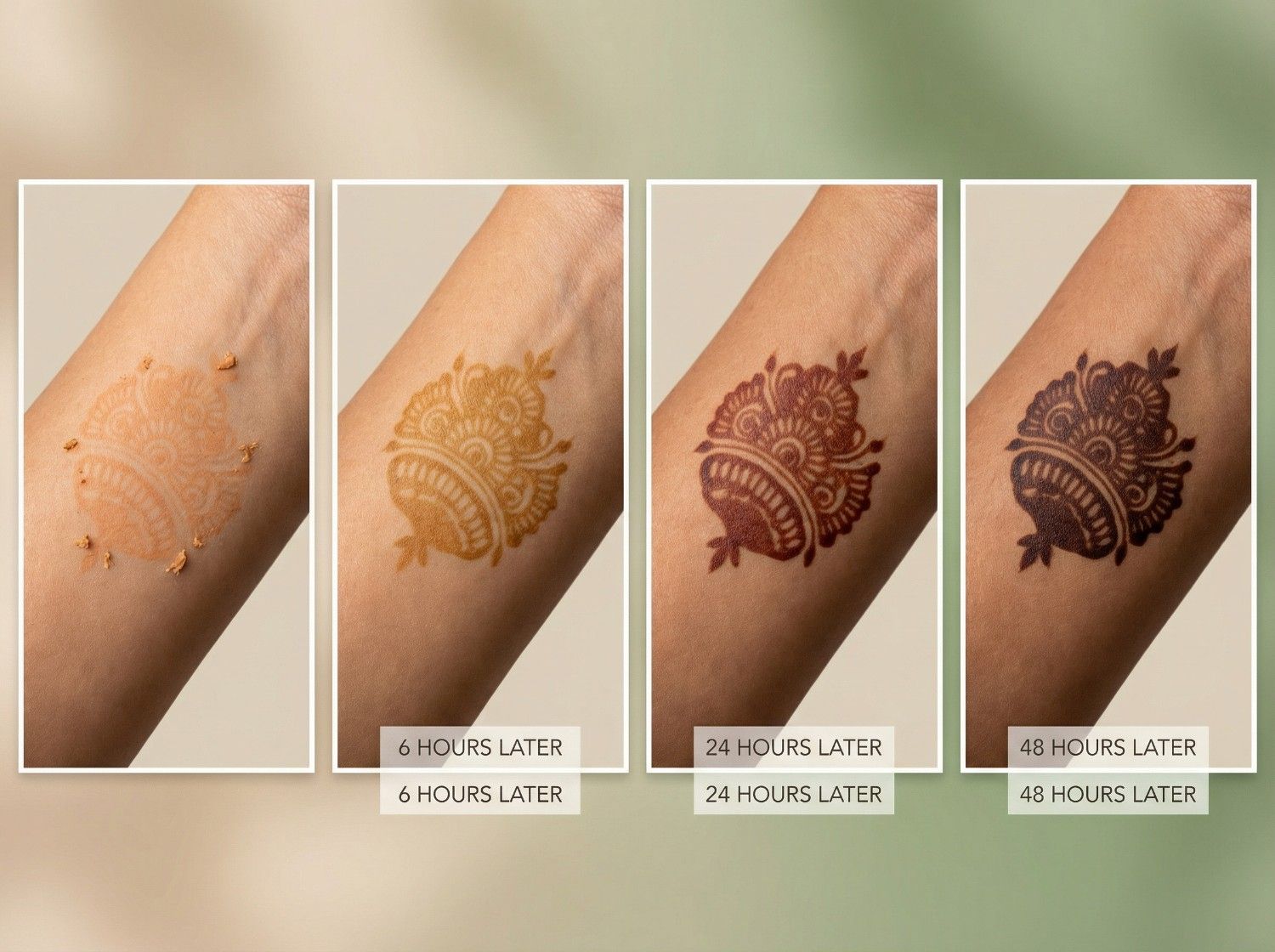
- Henna stain does not appear instantly
- Color deepens over 24–48 hours
- Final shade stays within brown-red tones

3. Why “Black Henna” Is a Misleading Term
The term “black henna” is often used incorrectly. In most cases, it refers to:
- Marketing exaggeration
- Henna mixed with other dyes
- Chemical-based temporary tattoo paste
If a product stains skin jet black within minutes, it is not behaving like natural henna.
4. Safety Concerns with Jet Black Temporary Tattoos
Traditional henna has been used safely for centuries. Problems arise when non-traditional additives are introduced to mimic black ink.
5. How to Get Darker Henna Results Naturally
While jet black is not possible, you can still achieve rich, dark brown henna stains by following traditional methods:
- Use fresh, finely sifted henna powder
- Allow proper dye release before application
- Keep paste on skin longer
- Avoid water immediately after removal
- Allow full oxidation time (24–48 hours)
6. Can Henna Make Hair Black?
Henna alone does not make hair jet black. On dark hair, it adds shine and warm undertones. For darker hair shades, henna is often used in combination with other plant-based ingredients like indigo — but henna itself remains brown-red in nature.
7. How to Identify Fake or Chemical Henna
- Instant black color within minutes
- Strong chemical or perfume smell
- Claims like “black in 5 minutes”
- No clear ingredient disclosure
Always choose transparent, plant-based products and avoid unrealistic color promises.
Final Thoughts
Natural henna is valued for its beauty, tradition, and safety. Expecting jet black color from henna leads to disappointment and risk. Understanding how henna truly works helps you enjoy its authentic results without falling for misleading claims.