
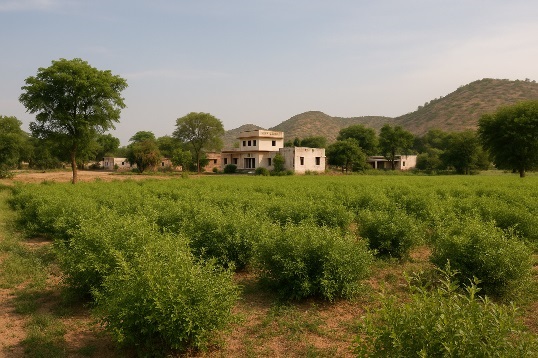
What Is Pure Henna? How Traditional Mehandi Is Made from Sojat Leaves
Pure henna is simply dried Lawsonia inermis leaves, milled into a fine powder—nothing else. In this guide, you’ll learn how authentic Sojat henna is traditionally produced, how to spot real henna, and how to prepare it for deep, long-lasting mehandi stain.
1) What “pure henna” actually means
Pure henna is henna leaf powder made only from the plant Lawsonia inermis. That’s it—no synthetic dyes, no metallic salts, no “instant color” chemicals. When mixed with a mildly acidic liquid and left to release dye, pure henna gives a natural orange-to-deep brown stain on skin and a red-brown to auburn tone on hair (depending on your base color).
Important: Real henna never stains skin jet black instantly. If you see “instant black” claims, it’s not traditional pure henna.
What makes henna stain?
Henna naturally contains a dye molecule called lawsone (2-hydroxy-1,4-naphthoquinone). Lawsone binds with keratin (skin/hair proteins) and creates that classic mehandi color. That’s why traditional henna stain develops gradually—usually 24 to 48 hours for peak depth.
External reading (plant reference): Learn more about Lawsonia inermis on Wikipedia.
2) Why Sojat henna is famous
Sojat (Rajasthan, India) is widely known in the henna industry for its long association with henna farming, processing, and supply chains. Traditional buyers often look for “Sojat henna” because consistent leaf sourcing, dry climate handling, and established processing practices help produce henna powder that performs well in stain.
If you’re building a routine around authentic henna (whether for mehandi or hair), the origin and freshness matter as much as the mixing method.
3) Traditional process: Sojat leaves → henna powder
Traditional henna powder production is simple in concept—but quality depends on careful steps. Here’s how authentic leaf-based henna is usually made.
Step A: Harvesting and sorting
- Leaves are harvested when mature and aromatic.
- Sorting removes stems, debris, and lower-quality plant parts.
- Clean handling reduces contamination and improves powder consistency.
Step B: Shade-drying (protecting color and aroma)
Traditionally, leaves are dried to reduce moisture. Controlled drying helps prevent fungal issues and preserves the leaf’s staining potential. Overheating can reduce performance, so many processors prefer gentler drying methods.
Step C: Milling (turning leaves into fine powder)
Dried leaves are milled into powder. Finer powder generally helps:
- smooth paste consistency
- better cone flow (for artists)
- more even stain coverage
Step D: Sieving and filtration
A key quality step is sieving the powder to remove coarse particles. Better filtration = smoother paste = cleaner lines and more uniform stain.
Step E: Packaging and storage
Even great henna can become weak if stored poorly. Pure henna should be packed to protect from:
- humidity (causes clumps and reduces freshness)
- heat (can reduce stain performance over time)
- strong odors (powder can absorb smells)
If you’re sourcing henna for business or bulk requirements, see our manufacturing overview: Hennahub.in.
4) How to identify authentic henna powder (quick checks)
You don’t need a lab to avoid most fake or low-quality henna. Use these practical checks first:
A) Smell test
- Pure henna often smells green, earthy, herbal.
- Strong “perfume-like” fragrance can indicate added scent.
B) Color test (powder + paste)
- Dry powder is usually green to olive, not bright red.
- After mixing and resting, the paste surface may darken slightly.
C) Stain reality check
- Pure henna stain develops over hours—not instantly.
- Jet-black results on skin are a red flag.
D) Texture test
- Good henna feels soft and fine (less gritty).
- Coarse particles can cause cracked lines and weak stain.
External educational reading about henna safety and “black henna” risks is commonly discussed by dermatology organizations. One example reference hub: DermNet (Black henna tattoo).
5) How traditional mehandi paste is made (simple, authentic method)
Traditional paste aims for a smooth texture, good dye release, and a consistent stain. Here’s a clean method you can follow at home.
Basic ingredients
- Pure henna powder (fresh, finely sifted)
- Mildly acidic liquid (like lemon water or tea with a little lemon)
- Sugar (optional, for better paste stickiness)
- Essential oil (optional, used by artists for aroma and paste behavior)
Step-by-step (beginner friendly)
- Mix henna powder with your acidic liquid until it becomes a thick, smooth paste.
- Cover the bowl and let it rest for dye release (commonly overnight, depending on temperature).
- Adjust consistency (a little liquid at a time) until it’s cone-ready.
- Apply, let it dry fully, then keep it on longer for deeper stain.
If you use essential oils in your mehandi routine, explore professional options at HeenaStore.com. (Always patch test first and use responsibly.)
How to get a deeper stain (traditional aftercare)
- Keep paste on longer (avoid early removal)
- Avoid water for the first few hours after removal
- Warmth helps stain develop
- Stain typically peaks in 24–48 hours
Quick reminder: Results vary based on skin type, temperature, paste freshness, and aftercare.
6) Common mistakes (and how to avoid them)
Mistake 1: Buying “instant black” henna
Traditional henna does not stain skin black instantly. Choose pure leaf-based powder and allow natural stain development time.
Mistake 2: Using old or poorly stored henna
Old stock or humid storage reduces stain. Store in a cool, dry place and seal the pack tightly.
Mistake 3: Skipping dye release time
Henna needs time for dye release. If you apply immediately after mixing, stain may be lighter.
Mistake 4: Removing paste too early
The longer you keep the paste on (comfortably), the deeper the stain can develop.
For a smooth, consistent experience, start with reliable products and a simple routine. Browse pure henna and hair herbs at Hennahubstore.com.
7) FAQs
Does pure henna stain skin black?
No. Pure henna typically stains from orange to deep brown tones over time. Black, instant stains are not traditional pure henna results.
How long does henna take to develop full color?
Many people see peak stain depth between 24 to 48 hours after paste removal, depending on skin type, temperature, and aftercare.
What does pure henna powder look like?
Pure henna powder is usually green to olive in color, fine in texture, and smells earthy/herbal. Bright red powder or strong perfume-like scent can be a warning sign.
Where can I learn more about your manufacturing and sourcing?
You can visit our manufacturing website at hennahub.in to understand our sourcing, processing, and quality approach.
Explore authentic henna (soft recommendations)
If you want to try a traditional routine using pure henna and supporting herbs/oils:
→ Shop pure henna & herbal hair powders (HennahubStore.com)
→ Explore essential oils for mehandi routines (HeenaStore.com)
→ Bulk / manufacturing overview (Hennahub.in)
Tip: For best results, choose fresh powder, mix patiently, and let the stain develop naturally.